Step 1: Shut Down Power to the Basement Circuit
- Locate your main electrical panel, typically on the garage wall or in a first-floor utility closet.
- Identify the breaker labeled "basement", "sump", or "laundry". If unlabeled, flip the main 200 amp disconnect.
- Verify power is off using a non-contact voltage tester held near the sump outlet from the top of the stairs. Do not descend into standing water until the reading is zero.
- Photograph the breaker position for your claim file.
- If the panel itself is in the basement and within 4 feet of standing water, do not approach it. Call your utility provider for a service disconnect at the meter. Chatham Hills utilities typically respond within 60 to 90 minutes for emergency pulls at no cost.
- Tape a paper note over the breaker reading "DO NOT RESTORE" to prevent another household member from re-energizing the circuit mid-extraction.
Step 2: Confirm Category and Source
- Inspect the water at the top step. Clear groundwater seeping from the pit edge is IICRC Category 1.
- Brown or gray water with a sewer odor indicates a check valve failure pushing Category 3 water back into the pit. Stop work and review our sewage backup cleanup procedure before continuing.
- Note the water line on the wall. Mark it with painter's tape at the highest point.
- Check the weather log for the prior 48 hours. Rainfall above 1.5 inches in a 6 hour window in Chatham Hills overwhelms most municipal storm systems and points to hydrostatic intrusion rather than pump failure.
- Inspect the pit lid and discharge line outside. A frozen or buried exterior discharge will cause the pump to short-cycle and eventually overheat, mimicking a true failure.
- Identify any floor drain backflow. Water entering through the floor drain rather than the pit indicates a municipal sewer surcharge and requires a different remediation path.
Step 5: Install a Replacement or Backup Unit
- Match horsepower to your existing pit. Most Chatham Hills homes built after 1990 use a 1/3 HP cast iron submersible rated for 2,800 to 3,500 gallons per hour at 10 feet of head.
- Homes with finished basements or high water tables should upgrade to 1/2 HP, rated 4,200 GPH.
- Use a 1.5 inch PVC discharge with a new spring-loaded check valve installed within 12 inches of the pump outlet.
- Add a battery backup pump rated for at least 7.5 amp hours. Expect 6 to 8 hours of intermittent runtime during a power outage.
- Test the system by filling the pit with a garden hose until the float triggers. Confirm shutoff before the pit overflows.
- Apply Teflon tape to all threaded joints, 3 wraps clockwise. Hand-tighten then add 1.5 turns with a pipe wrench. Over-torquing cracks the pump volute.
Step 9: Prevent the Next Failure
- Replace primary sump pumps every 7 to 10 years regardless of apparent condition. Bearings degrade silently after year 5.
- Test the system monthly by pouring 5 gallons into the pit. Confirm cycle time under 20 seconds.
- Clean the pit annually. Sediment buildup above 2 inches reduces effective pit volume and forces shorter cycles.
- Install a high-water alarm with cellular notification. Units cost $80 to $200 and detect failures within 60 seconds.
- Verify discharge line slope away from the foundation at minimum 1/4 inch per foot for the first 10 feet.
Each of these triggers a professional response under our basement flooding service protocol. Calling early reduces the average Chatham Hills claim from $12,000 to under $6,000 in our internal data.
Step 7: Document for Insurance
- Photograph the failed pump, the water line, the breaker, and every piece of damaged content with timestamps.
- Save the failed pump in a labeled bag. Adjusters frequently request it.
- Request an itemized scope from your restoration contractor using Xactimate line items. Chatham Hills Water Restoration provides this at no charge.
- File the claim within 72 hours. Most Chatham Hills carriers require notice within 14 days but reward early reporting with faster adjuster assignment.
- Keep a written log of all drying readings, equipment runtime hours, and contractor visits. Adjusters reduce payouts by 10 to 25 percent when documentation gaps exceed 24 hours.
Step 4: Diagnose the Pump
- With power off, lift the pump from the pit by its discharge pipe, not the cord.
- Inspect the float switch. A tethered float tangled on the pit wall is the cause in roughly 30 percent of Chatham Hills failures.
- Check the impeller through the intake screen for gravel, lint, or a wedged toy. Clear with a flathead screwdriver.
- Restore power briefly with the pump set in a 5 gallon bucket of water. If the motor hums but the impeller does not spin, the capacitor is burned out. Replacement pump required.
- If the motor is silent, test the outlet with a plug-in circuit tester. A tripped GFCI accounts for another 20 percent of false failures.
- Measure pump amp draw with a clamp meter at the cord. A 1/3 HP unit pulling above 8 amps under load indicates a failing winding and imminent burnout, even if it still moves water.
Step 6: Structural Drying Sequence
- Remove baseboards within 24 inches of the water line. Drill 1/2 inch weep holes every 16 inches at the bottom of drywall to release trapped moisture.
- Pull up wet carpet pad. Pad is not salvageable after Category 1 saturation beyond 48 hours.
- Place one LGR dehumidifier per 1,000 square feet, target 30 to 40 percent relative humidity within 72 hours.
- Set air movers at 16 foot intervals along walls, angled 15 to 45 degrees to the surface.
- Monitor with a pinless moisture meter daily. Drywall must reach under 16 percent, framing under 19 percent before reconstruction.
- Maintain interior temperature between 70 and 85 degrees Fahrenheit. Drying rates fall by roughly 30 percent below 65 degrees.
Step 3: Establish Temporary Extraction
- Deploy a wet/dry vacuum rated for at least 6 gallons. Empty into a utility sink or exterior grade drain at least 10 feet from the foundation.
- If water exceeds 2 inches across more than 200 square feet, a shop vac will not keep up. Volume math: a 6 gallon vac empties roughly every 90 seconds, yielding 240 gallons per hour. A flooded Chatham Hills basement holds 1,500 to 4,000 gallons.
- At those volumes, call for truck-mounted extraction. Chatham Hills Water Restoration units pull 100 to 150 gallons per minute.
- Stage extraction from the lowest point of the slab outward. Floors in Chatham Hills homes typically pitch 1/8 inch per foot toward the pit, so working away from the pit fights gravity.
- Wear Class II PPE: nitrile gloves, rubber boots rated to 16 inches, and ANSI-approved eye protection. Replace gloves every 2 hours of contact exposure.
Step 8: When to Stop and Call
- Water deeper than 2 inches across the entire basement.
- Any sewage odor, sheen, or visible debris.
- Wet outlets, panels, or HVAC equipment.
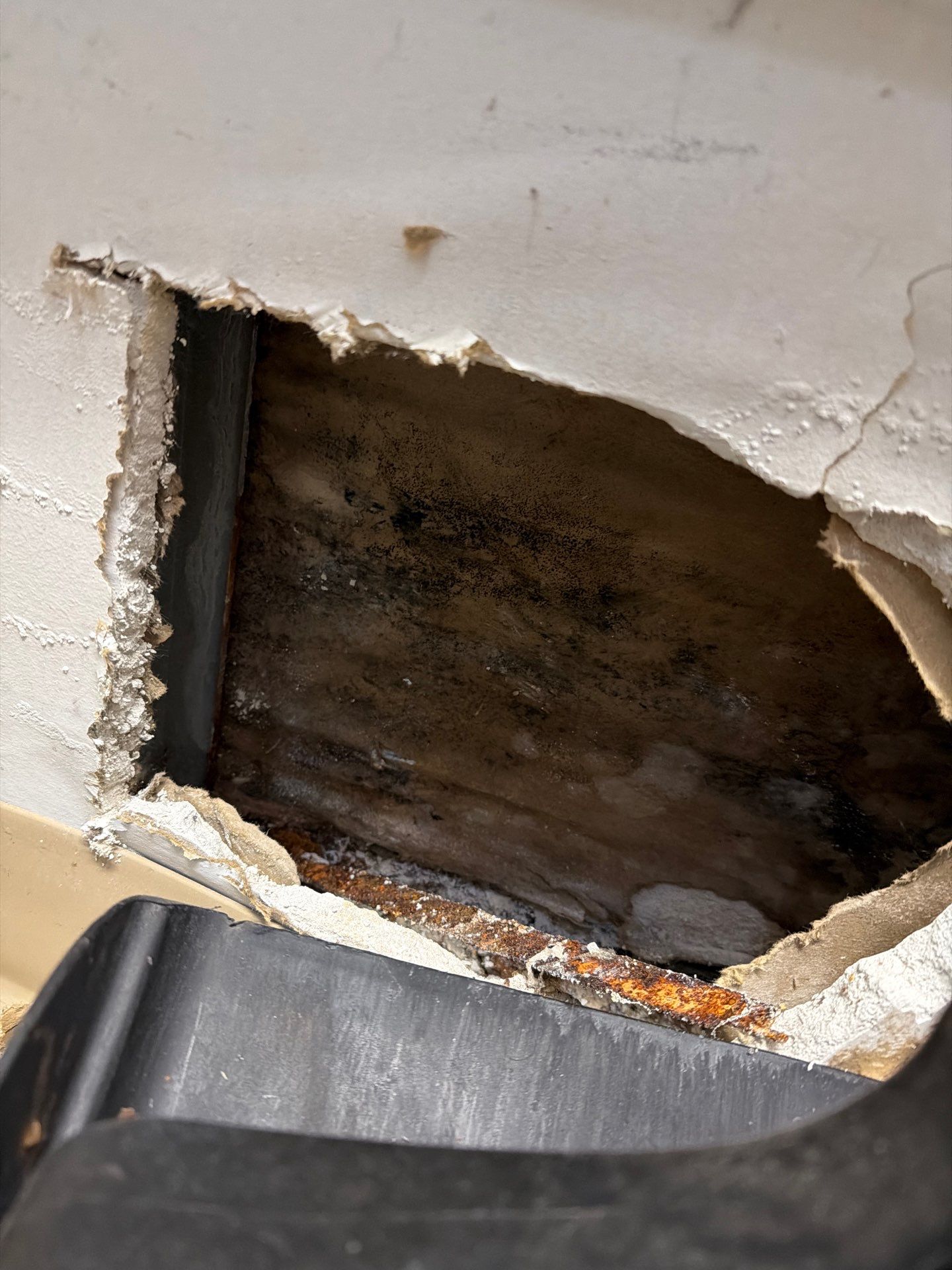
- Visible mold growth, which can begin within 24 to 48 hours of saturation.
- Drying readings that have not improved after 48 hours of DIY equipment.
- Any occupant with asthma, immune suppression, or under age 2 in the household.