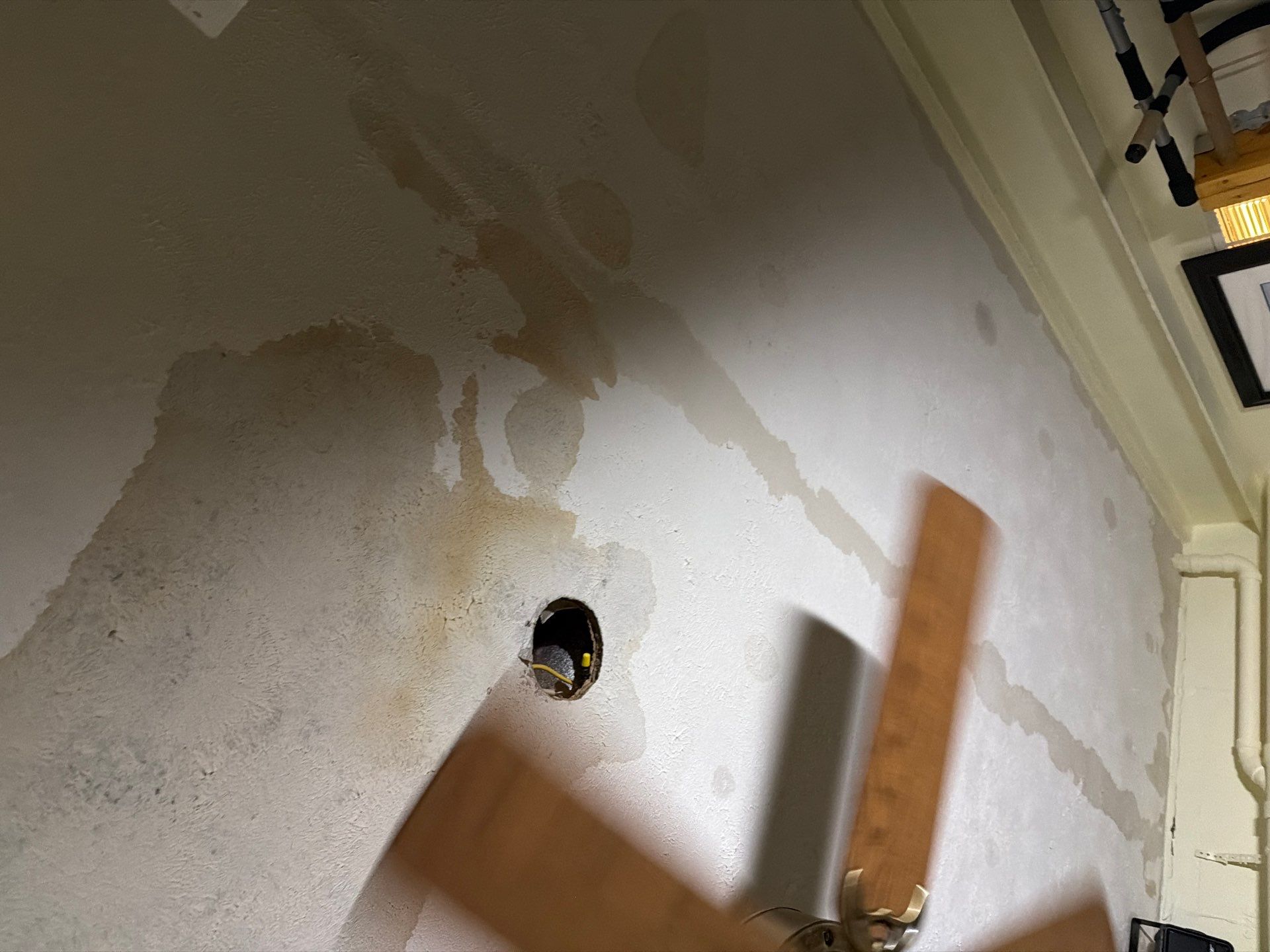
How do you actually find a leak inside a wall without cutting it open?
We layer several tools, because no single instrument tells the whole story. The first pass is usually an infrared camera, which reads surface temperature differences. A pressurized cold water line behind drywall shows up as a cool stripe, and a saturated stud cavity reads cooler than the dry framing around it. The thermal image does not see water directly, it sees the temperature signature water leaves behind, so we cross check every hit with a moisture meter. A pinless meter scans through paint and drywall to roughly one inch deep, while a pin meter confirms the reading by measuring electrical resistance at the actual material. When the leak is on a pressurized line, we add an acoustic listening device that amplifies the hiss of water escaping a pinhole. On slab or below grade runs, tracer gas can be introduced into the line so a sensor can sniff the escape point through the wall surface.
The order matters. We start broad with thermal, narrow with moisture meters, then confirm with acoustic or tracer gas only if needed. Jumping straight to the most invasive tool wastes time and can mislead the diagnosis. A good technician also reads the building, not just the meters. We look at where the bathroom is stacked above the kitchen, where the water heater sits, and how the supply lines run through the basement ceiling. That mental map of the plumbing tells us which wall cavities are worth scanning first.
How accurate is non invasive detection, really?
On a typical interior wall leak in Chatham Hills, we can usually narrow the source to a six to twelve inch area without opening anything. That is accurate enough for a plumber to make one clean access cut instead of removing a full wall section. Accuracy drops when the leak is intermittent, when the pipe runs through insulated exterior walls, or when water has traveled along a top plate before dripping down. In those cases we may still locate the wet zone precisely but recommend a small two by four inch inspection opening to visually confirm the pipe before repair. Our moisture mapping process with thermal imaging documents every reading, so you have proof of where the moisture lives and where it does not.
Documentation matters more than most homeowners realize. If you end up filing an insurance claim, the adjuster wants to see why a particular section of wall was opened. A grid of moisture readings with photos beats a verbal explanation every time, and it protects you from being told the damage was preexisting or unrelated to the covered event.
How quickly can you respond when a leak is actively spreading?
For active leaks where water is visibly damaging finishes, Chatham Hills Water Restoration dispatches a crew to Chatham Hills addresses in most cases within 2 hours. Speed matters because every hour of unchecked saturation pushes more water into framing, insulation, and adjacent rooms. We arrive with detection gear and drying equipment on the same truck, so if we find the source quickly we can begin extraction and air movement the same visit rather than scheduling a return trip.
When is opening the wall actually the smarter choice?
Sometimes a small surgical cut beats hours of scanning. If the leak is clearly behind a single accessible spot, if the homeowner already plans to remodel the room, or if moisture readings suggest the damage is so extensive that drywall has to come out anyway, we say so. Our job is to give you the honest path, not to sell a service you do not need.
What clues should make you call before the wall is obviously wet?
You will notice some early signs before drywall starts to bubble. A warm spot on a tile floor can mean a hot water line is leaking under the slab. A faint mildew smell that only shows up after a hot shower often points to a drain leak behind tile. Paint that wrinkles in a small patch, baseboards that feel spongy at one end, or a water meter that keeps spinning with every fixture off are all reasons to investigate. We cover more of these early indicators in our guide to signs of hidden water damage in your home, which is worth a read before you ignore a small symptom.
Water bills are another quiet clue. If your usage jumps fifteen or twenty percent without any change in household habits, something is running where it should not. A simple meter test (shut every fixture, watch the dial for fifteen minutes) tells you whether you have a supply side leak somewhere in the house. Drain leaks will not show on the meter, but they often reveal themselves through staining on a ceiling below an upstairs bathroom.
Can you detect leaks in older Chatham Hills homes with plaster walls?
Yes, though plaster changes the approach. Thermal imaging still works because temperature differences read through plaster fine. Moisture meters need to be calibrated for the denser substrate, and pinless readings are less reliable through lath. We compensate by taking more readings and relying more heavily on acoustic and tracer methods. Older homes in Chatham Gallery (The Chatham Gallery) style neighborhoods often have galvanized supply lines that develop pinhole leaks at threaded joints, and those are some of the most rewarding finds because catching one early can save an entire wall. We also watch for cast iron drain stacks with cracked hubs, which weep slowly and can soak a chase for months before anyone notices a stain on the ceiling below.
What happens once the leak is found?
Detection is step one. Once we mark the leak location, a licensed plumber handles the repair itself. From there, our crew assesses how far the water traveled inside the wall cavity. If the framing and insulation are still mostly dry, we may only need to remove a small access panel. If moisture readings show saturation across multiple studs, controlled demolition and structural drying become part of the scope. That overlaps with our standard water damage restoration process, where we set air movers and dehumidifiers to dry the cavity before any drywall goes back up. Closing the wall over wet framing is how mold problems start, and the IICRC S520 standard exists specifically to prevent that mistake.
What does professional leak detection cost in Chatham Hills?
Pricing depends on how much of the home we need to scan and which tools the job requires. A focused single room investigation runs at the low end. A whole house scan with acoustic and tracer gas work sits at the high end. Here is what we typically see in Central Indiana homes:
Chatham Hills Water Restoration provides a free initial assessment for active water damage situations. If the visit turns into a full detection project, we explain the scope before any tool comes out of the truck. Many claims also reimburse detection costs as part of the loss, so keep your invoice and the written report we provide.